Showing posts with label BP OIL SPILL DISASTER: Mutated Sea Life. Show all posts

19 Nov 2012

OUT DAMNED LOGO ... Shakespearean flashmob hits British Museum


BP OR NOT BP 


Round about the globe we go;
Into the ocean oil we throw.
Tar, that lurks beneath the ground,
Uproots and kills without a sound.
Fish lie dead, nothing survives
While back in London our brand thrives

Double, double: oil is trouble,

Tar sands burn, as greenwash bubbles.

Mountains of our filthy cash

In bank accounts: an awesome stash;
Greenhouse gas, a Gulf in grief,
We’re always lurking there, beneath.
Dodgy dealings give us pounds
Towards the champagne/caviar rounds.


200 members of the Reclaim Shakespeare Company took over the British Museum's Great Court and performed a series of anti-BP plays yesterday. The flashmob of 'actor-vists' known as the performed a re-interpretation of Shakespeare's Macbeth in the British Museum's Great Court. The performance -- which included 200 people chanting "double, double, oil is trouble; tar sands burn as greenwash bubbles" - was followed by three more Shakespeare-inspired playlets. The flashmob provoked a major police and security presence inside the museum. The BP-sponsored "Shakespeare: Staging The World" exhibition was closed and the museum's giant iron gates were bolted shut for the duration. This comes in the same week as BP accepted criminal responsibility, including manslaughter, for the Deepwater Horizon drilling disaster. It has been hit with a fine of $4.5 billion, making it the biggest convicted corporate criminal in US history.


http://www.guardian.co.uk/environment/2012/nov/15/bp-largest-penalty-history-gulf-oil-spill


THE SILENT VOICE


This was the ninth and final pop-up performance this season by the Reclaim Shakespeare Company, a group who have come together in opposition to BP's sponsorship of the World Shakespeare Festival. They have been particularly critical of BP's branding of several plays by the Royal Shakespeare Company (RSC), and the British Museum's 'Shakespeare: Staging the World' exhibition.

During their season of theatrical protests, the Reclaim Shakespeare Company have invaded the stage three times at the Royal Shakespeare Theatre in Stratford, and once each at the Roundhouse, Noel Coward Theatre and Riverside Studios in London. They have also performed uninvited twice before at BP-branded Shakespeare events at the British Museum. Performances have attracted support and applause from audiences, staff and even RSC performers. 


Executive witch, by Kristian Buus


The protests at the RSC appear to have been successful. Following these interventions, the RSC last week stated that: "We have no further sponsorship [with BP] confirmed". Next year's programme of plays has been announced, and none are sponsored by BP.

This season finale, entitled 'Out, damned logo!', was the first to be openly advertised. The actor-vists are concerned by the British Museum's decision to accept sponsorship from BP in the wake of the Deepwater Horizon drilling disaster, the company's decision to start extracting highly polluting and destructive tar sands oil in Canada, its enormous contribution towards climate change, and its recently-announced partnership with Russian state-owned oil company Rosneft in order to exploit the hazardous and vulnerable Arctic. Pressure on cultural institutions to consider the ethics of their sponsorship deals is currently high following the sudden ending of the National Gallery's long-running sponsorship deal with an arms company last month.


This flashmob was organised by the Reclaim Shakespeare Company, UK Tar Sands Network, Liberate Tate, Art Not Oil, Rising Tide UK and London Rising Tide



19 Apr 2012

BP OIL SPILL DISASTER: Mutated Sea Life


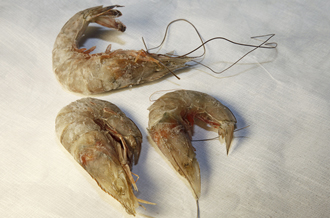
Eyeless shrimp and fish with lesions are becoming common, with BP oil pollution believed to be the likely cause.

Gulf of Mexico fishermen, scientists and seafood processors have told Al Jazeera they are finding disturbing numbers of mutated shrimp, crab and fish that they believe are deformed by chemicals released during BP's 2010 oil disaster.

Along with collapsing fisheries, signs of malignant impact on the regional ecosystem are ominous: horribly mutated shrimp, fish with oozing sores, underdeveloped blue crabs lacking claws, eyeless crabs and shrimp - and interviewees' fingers point towards BP's oil pollution disaster as being the cause.


at least 50 per cent of the shrimp caught in that period in Barataria Bay, a popular shrimping area that was heavily impacted by BP's oil and dispersants, were eyeless.

Gulf seafood deformities alarm scientists


It's almost two years since BP's oil spill in the Gulf of Mexico. Now, scientists say they have found deformities among seafood and a great decline in the numbers of marine life. 

There are crabs "with holes in their shells, shells with all the points burned off so all the spikes on their shells and claws are gone, misshapen shells, and crabs that are dying from within … they are still alive, but you open them up and they smell like they've been dead for a week". There are eyeless shrimp, shrimp with abnormal growths, female shrimp with their babies still attached to them, and shrimp with oiled gills.

"We also seeing eyeless fish, and fish lacking even eye-sockets, and fish with lesions, fish without covers over their gills, and others with large pink masses hanging off their eyes and gills." It's not incredibly surprising to see deformities in the wake of the oil spill--we knew (and know) very little about dispersants in general and about Corexit, the dispersant used by BP, in particular. A nonprofit environmental law firm called Earthjustice actually had to sue to obtain the precise formula of the material, and even then, that group claims that there is nowhere near enough data to know what effects the dispersant will have on the Gulf.


BP OIL SPILL DISASTER: Mutated Sea Life - Shrimp Without Eyes, Crabs Without Claws


According to Earthjustice's review, at least 13 of the 57 chemicals in Corexit are suspected or known to be toxic to aquatic life. Phosphorus, for example, may have helped microbes readily break down the oil, but phosphorus also happens to be toxic to fish. What's not clear is what's actually causing these deformities--is it the oil, the dispersant, or both? We do know, disturbingly, that the oil entered the food chain. That may be part of the problem here--shrimp and crabs are bottom-feeders, and snapper, according to Wikipedia, also commonly feast on crustaceans like sea lice and crabs (though not shrimp).

Eyeless shrimp, fish with oozing sores and other mutant creatures found in the Gulf of Mexico are raising concerns over lingering effects of the BP oil spill. On April 20, 2010, an explosion aboard the BP-leased Deepwater Horizon rig killed 11 people and spewed an estimated 4.9 million barrels into the Gulf, in the worst offshore oil spill in U.S. history. Two years later, scientists and commercial fishers alike are finding shrimp, crab and fish that they believe have been deformed by the chemicals unleashed in the spill, according to an extensive report by Al Jazeera English.

"At the height of the last white shrimp season, in September, one of our friends caught 400 pounds of these," Tracy Kuhns, a commercial fisher from Barataria, La., told Al Jazeera, showing a sample of the eyeless shrimp. 'Eyeless fish, and fish lacking even eye sockets, and fish with lesions, fish without covers over their gills....' - Darla Rooks, Louisiana fisher Darla Rooks, another lifelong fisher from Port Sulfur, La., told the broadcaster she was seeing "eyeless fish, and fish lacking even eye sockets, and fish with lesions, fish without covers over their gills and others with large pink masses hanging off their eyes and gills."

Rooks added that she had never seen such deformities in Gulf waters in her life -- a refrain common to most fishers featured in the report -- and said her seafood catch last year was "ten percent what it normally is." A survey led by the University of South Florida after the spill found that between two and five percent of fish in the Gulf now have skin lesions or sores, compared to data from before the spill, when just one-tenth of one percent of fish had any growths or sores. Scientists blamed the mutations on the polycyclic aromatic hydrocarbons (PAHs) released from the spill's submerged oil as well as the two million gallons of the dispersant Corexit that BP used in an attempt to clean up the spill.

"The dispersants used in BP's draconian experiment contain solvents, such as petroleum distillates and 2-butoxyethanol. Solvents dissolve oil, grease, and rubber," Riki Ott, a toxicologist and marine biologist explained to Al Jazeera. "It should be no surprise that solvents are also notoriously toxic to people, something the medical community has long known." BP has maintained that Gulf seafood is safe, saying in a statement, "Seafood from the Gulf of Mexico is among the most tested in the world, and, according to the FDA and NOAA, it is as safe now as it was before the accident."

On Wednesday BP sealed an out-of-court, $7.8 billion settlement with lawyers acting on behalf of thousands of individuals and businesses affected by the Deepwater Horizon disaster. Under the deal, the Gulf seafood industry is slated to receive over $2 billion for economic loss.